Description
Research Use Only
This product is intended for laboratory research use only. It is not intended for human consumption, therapeutic, or diagnostic use. Handle in accordance with good laboratory practices.
What Is KLOW Blend?
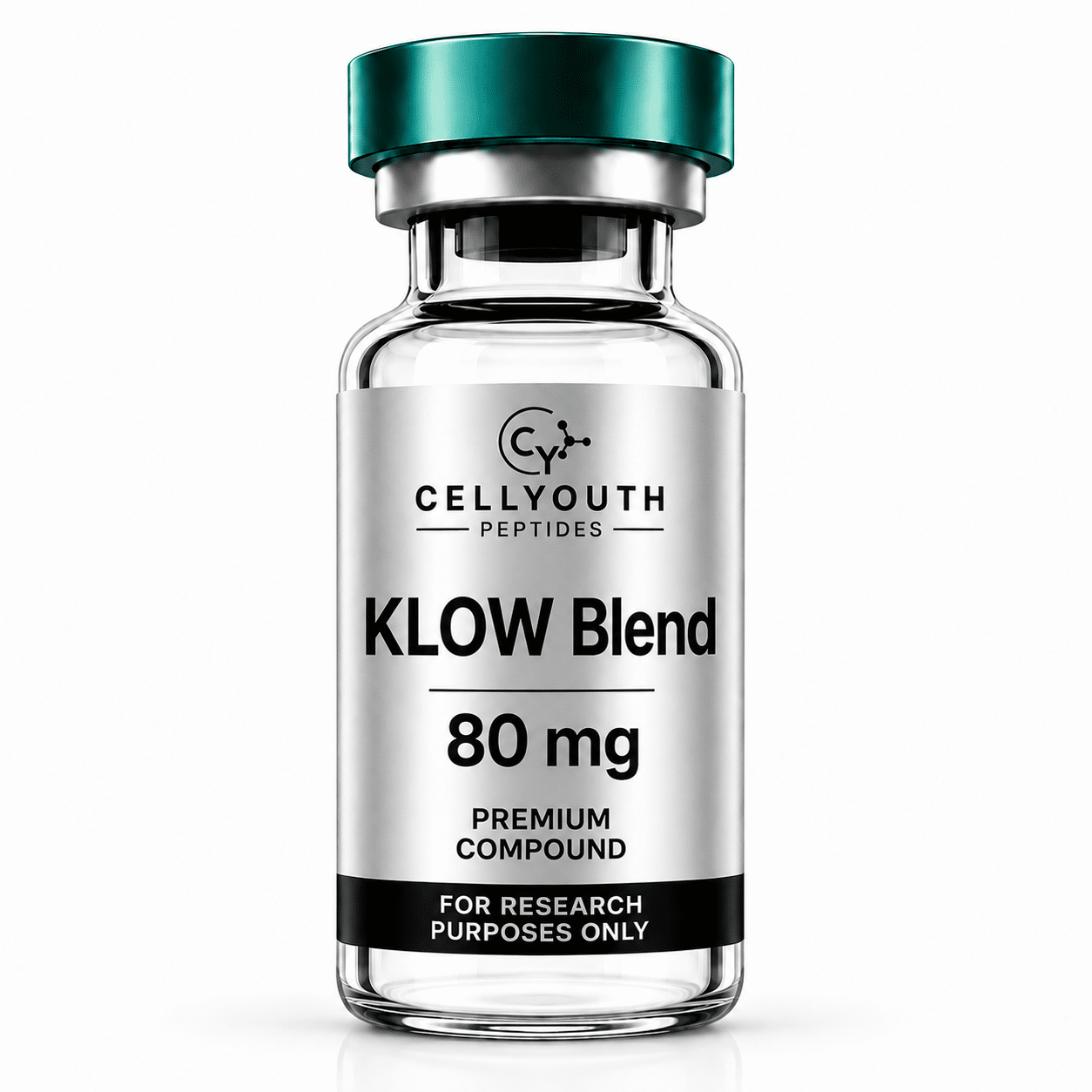
KLOW Blend is a multi-component research formulation combining four distinct peptides: GHK-Cu, BPC-157, TB-500, and KPV, into a single high-purity lyophilized material designed for in vitro and analytical laboratory applications.
Overview
KLOW Blend is an advanced four-peptide research formulation structured to examine synergistic biological pathways in tissue repair, cellular remodeling, and inflammatory modulation. Supplied as an 80 mg lyophilized powder vial, the blend contains a precise ratio of GHK-Cu (50 mg), BPC-157 (10 mg), TB-500 (10 mg), and KPV (10 mg). Manufactured to strict quality standards with third-party analytical verification, it displays a characteristic pale-to-distinct blue color upon reconstitution due to the copper complex within GHK-Cu. For research use only.
History
The KLOW Blend was developed by researchers seeking to combine four distinct peptides with well-established preclinical literature into a single multi-target model. Each constituent has a unique scientific history: GHK-Cu was identified in 1973 in human plasma; BPC-157 was isolated from human gastric juice; TB-500 was derived as a synthetic fragment of the naturally occurring protein thymosin beta-4; and KPV was identified as the anti-inflammatory C-terminal tripeptide of alpha-melanocyte-stimulating hormone (α-MSH). Combining these individual sequences allows researchers to study their simultaneous influence on host defense, cellular migration, and structural signaling.
Research Findings
Preclinical literature investigates the individual and combined mechanisms of the KLOW components across multiple physiological pathways. GHK-Cu is extensively studied for its role in collagen synthesis, gene expression regulation, and extracellular matrix remodeling. BPC-157 is researched for its influence on angiogenic signaling, growth factor upregulation, and tendon, muscle, and tissue repair. TB-500 is evaluated for promoting cellular migration, actin-binding dynamics, and tissue regeneration, while KPV is studied for its ability to modulate NF-κB inflammatory cascades without melanocortin receptor activation. Together, the formulation is utilized in research models focused on orthopedic repair, skin integrity, and inflammatory modulation.